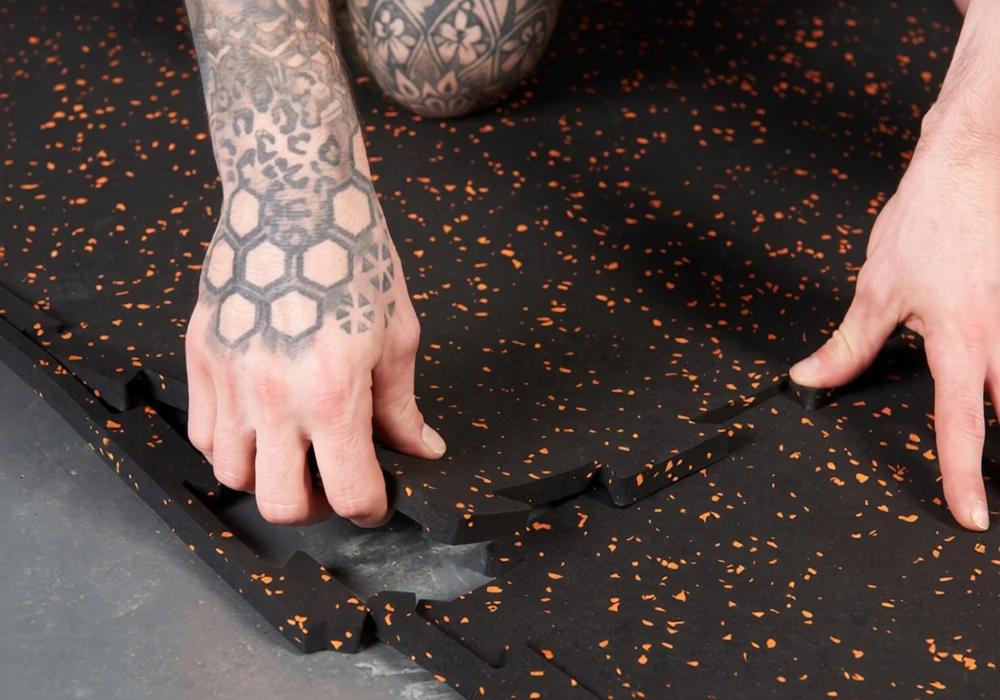
Choosing the correct gym flooring thickness is one of the key tasks when installing gym flooring. It does not matter whether you are working with a small home gym, a commercial or even a professional weightlifting room, the flooring thickness will impact the quality of your workouts, equipment protection, noise insulation, and the durability of the floor.
In addition, there are many people who have concerns with purchasing the expensive gym equipment but they are not thinking about the surface where it stands. Improper thickness of the flooring can damage your subfloor, produce unnecessary noise, make the footing unstable and reduce the durability of the floor and your equipment.
Gym flooring does much more than covers concrete or tiles. It acts as a protective layer that absorbs impact, improves grip, reduces vibrations, and creates a more comfortable workout experience.
The ideal thickness depends on how much force reaches the floor. Walking on a treadmill creates far less impact than dropping a loaded barbell during strength training. Choosing flooring based on workout intensity helps prevent unnecessary repairs and improves overall safety. Well-selected gym flooring provides:
- Better shock absorption for joints.
- Protection for concrete, wood, or tile subfloors.
- Reduced equipment movement.
- Lower noise levels.
- Improved workout stability.
- Longer flooring lifespan.
Every workout requires different levels of protection. Here’s a quick comparison of common gym flooring thicknesses. Instead of choosing the thickest option available, match the flooring to your workout style.
| Thickness |
Best For |
| 6 mm |
Yoga and stretching |
| 8 mm |
Light cardio |
| 10 mm |
Home gyms |
| 15 mm |
Multi-purpose gyms |
| 20 mm |
Strength training |
| 30 mm |
Heavy commercial gyms |
| 40 mm+ |
Olympic lifting zones |
Gym floor mats that are thin are ideal for low-impact exercises. This is because these exercises do not require a lot of padding since the body weight of the individual produces less force. This type of flooring is not recommended for free weights and exercise machines. The advantages are:
- Easy to clean
- Easy to install
- Exercise is comfortable
- Inexpensive price
The 10mm rubber flooring can absorb all the daily shocks and impacts without causing the instability of equipment. Also, this kind of flooring will prevent any marks or scratches on the concrete floor. If you are planning to create a multi-functional home gym, 10mm is an excellent choice. It is suitable for:
- Adjustable benches
- Dumbbells
- Resistance training
- Treadmills
- Exercise bikes
If you include strength, cardio and functional training in your exercise routines, then 15 mm flooring can give you additional protection without compromising the stability of the surface. Thick flooring is less inclined to vibrations compared to thin flooring. Some of its applications are in:
- Kettlebells
- Dumbbells (mid-heavy)
- Functional fitness
- Circuit training
- Group training studios
As heavyweights are integrated into your training regimen, the need for heavier flooring becomes increasingly crucial. Advantages include equipment stability, less floor wear and tear, sound insulation, and increased floor longevity. 20mm gym flooring will cushion the impact of:
- Heavy dumbbells
- Squat racks
- Smith machines
- Controlled deadlifting
Professional gyms receive many workouts per month and need a floor that will endure constant wear. With a thickness of 30-40 mm, rubber floors have exceptional shock resistance and reduce vibrations from falling weights. Rubber floors with thicker thicknesses work best for:
- Olympic lifting
- CrossFit training
- Powerlifting
- Fitness centers
- Performance training rooms
Thickness is not the sole determinant of performance; several other factors will help determine what floor you need. This is always the first question that should be asked. “What exercise will be conducted?”
- For cardio, there should be moderate padding.
- For strength training, there should be high impact absorption.
- For Olympic lifting, there should be maximum protection.
- Heavy equipment applies constant pressure on the flooring.
- A concrete floor offers strong support naturally, hence requiring moderate flooring thickness for most situations.
- A wooden floor needs more padding to help absorb vibrations and prevent wear and tear.
- A tiled floor needs thicker rubber flooring to protect tiles from cracking due to repeated impact.
- If you use your exercise room in an apartment, office, or building, thicker flooring helps absorb vibrations and reduce noise transfer.
In warm climates such as Dubai and the entire UAE, rubber gym flooring continues to gain preference due to its durability to accommodate heavy indoor workouts and home-based gym, fitness center, and wellness studio flooring. Installation is important, even when using the proper thickness. The following tips will ensure you get optimal results:
- Start by cleaning the sub-floor.
- Check that the surface is level.
- Leave room for expansion where necessary.
- Fix the edges in case of high traffic.
- Give the rubber floor time to settle before using it.
The best gym flooring thickness does not necessarily depend on universal measurements but the way of training in the gym. Selecting the right thickness ensures a safe working space, protection of existing floorings, reduced noise levels, and an extended life for your flooring and equipment.
Flooring according to your current workout will ensure future fitness and growth of your gym by making it one of the wisest investments in your gym.